


There certainly aren’t many projects as borderless, as unconstrained or as forward-thinking as Dave Colombo Jenkins’s 1 More Thing. As a label, editorial platform, event organiser and everything else in between, the project has excelled at shining the light on incredible talent in the underground bass scene, passionately rebelling against trend-driven, algorithm-pleasing music. Yet despite having come to expect the unexpected from 1 More Thing, no one could have prepared for the epic debut album Spore Prints from mysterious Swiss producer Deerhill.
Inspired, among many other things, by Deerhill’s fascination for the natural world and his background in film and visual effects, Spore Prints is a thrilling audio-visual voyage through the hinterlands of electronic music. Echoes of previous releases on the likes of Noisia’s mighty VISION, or US-based experimental bass label Onset Audio can certainly be heard, yet this album pushes the boundaries of Deerhill’s sound further still, making for a truly captivating and enthralling ride. As the dust settles following the release of this remarkable project, Kmag caught up with Deerhill to delve deeper into the story behind Spore Prints.
The Spore Prints project is accompanied by stunning visuals. Was this always the plan, or did the visual element come together once the music was written?
This whole project started quite a while ago and surely took longer than expected to complete. It was not a result of production or musical issues, blocks or perfectionism, but mostly about life happening: work, projects and some other rather unpleasant life chapters that we all will go through sooner or later. In these difficult moments though, I still need consistency and rituals to function well and keep my head above the water. One of these rituals became my regular walks in a little forest close to my home. There isn’t even anything special about that place, however while working on the project and doing my regular walks to breathe and meditate, I started to notice certain patterns, particular corners (I was always fully sober, although oxygen itself and mental work can transport you far), and I also realised that forest has quite a wide range of different fungi/mushrooms. As I am generally interested in the subject of mushrooms (the bio-chemical aspects, the cultural and historical aspects, the health-side, the culinary side), I more and more started to construct a complex sci-fi backstory about the subject, inspired by works like the novel Roadside Picnic, the films Annihilation, Stalker, and The Andromeda Strain, as well as a specific The X-Files episode.
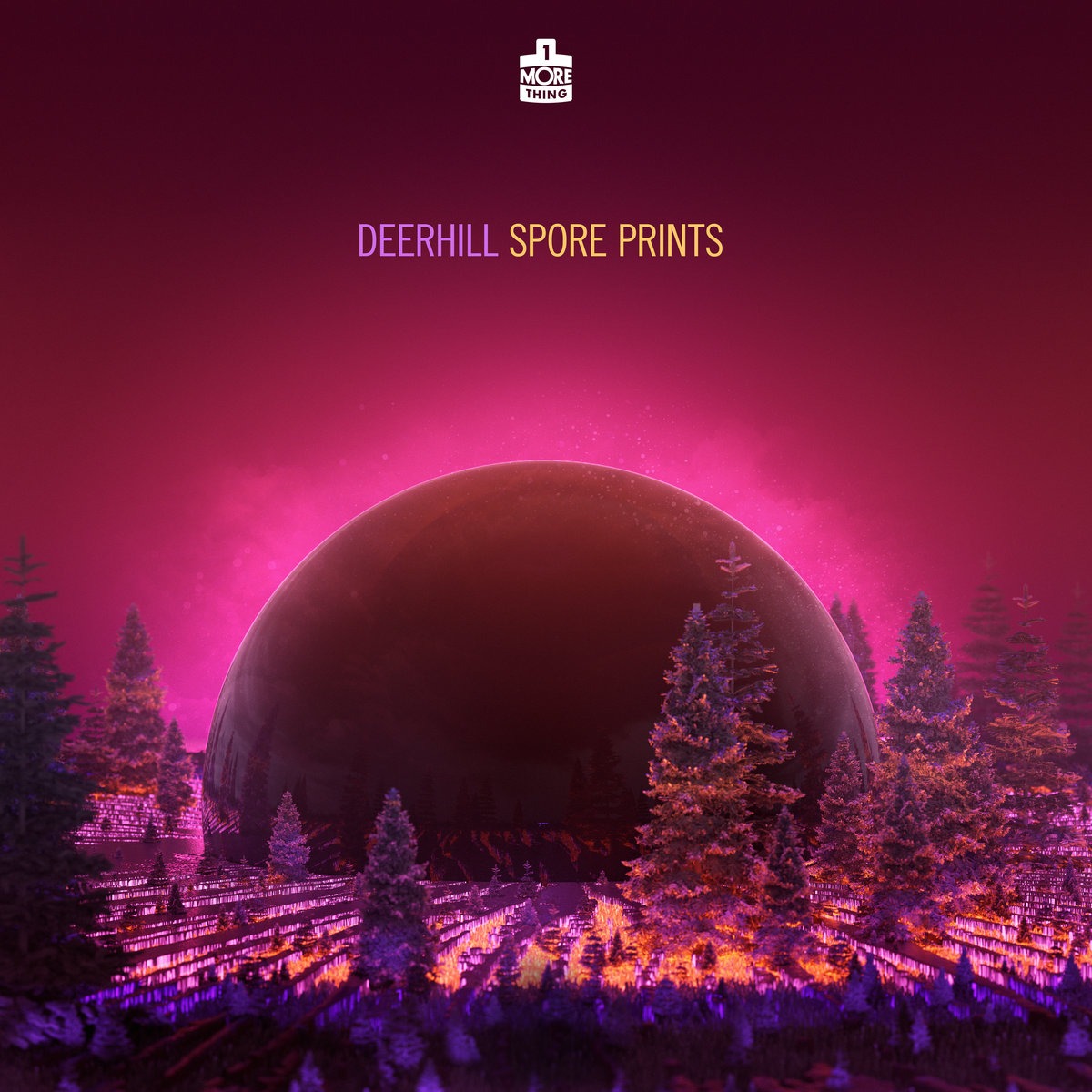
As I have worked in the visual field all my life and surely produce visual music, once my tracks took their final form, the visuals emerged rather quickly and precisely to tell this abstract story. There’s an outer-wordly aspect to it as well as you can see by the main cover as well as a homage to Akira. But that would be too much to explain for now.
How was your process in creating this as a multimedia project?
Besides the first visual ideas and concepts, this is a classic ‘music first, visuals second’ approach this time. Even though I visualise a lot mentally while writing music, I did not really spend energy and time on a concrete visual narrative. The idea of pushing the visual and motion aspect to showcase and promote the album was mainly initiated and sparked while discussing it with Dave Columbo Jenkins. He remembered some Instagram shorts I made about some of my forest walks where I created an uncanny, uncomfortable little story about lights and purple fog in the forest, calling for me. He remembered and we took it as a starting point and shortly after, we decided to invest time and energy into the visuals. After some first edits and tests, we agreed that this could be and maybe should be shown on a larger screen and not just been watched on our mobile phones or laptops. I think it also ignited Dave’s great initiative of ‘sit down, shut up and listen’ as part of the broader project ‘be a better fan’.
Your background in film and visual effects seems to really bleed into the cinematic nature of your sound. Do you think your film work influences the way you create music?
Absolutely. Even though my work on movies is and was mostly of technical nature (especially in VFX) it still changed me in how I see movies, what they can mean and why things remain imprinted into our mind and subconscious. It’s a bit contradicting, but the more I was working in this highly technical VFX field, the more it helped me to realise how little the form has influence on quality rather than purpose and meaning. In short, a great story and/or concept will be great, no matter the meduim. Technical greatness is temporary, as technology ages quickly, purpose and meaning are timeless. Just look at the original Jurassic Park, and why it’s still an absolute masterpiece and will be a masterpiece in 100 years; it is not a movie about fancy CGI dinosaurs and action. It’s a movie about the struggle of becoming and being a parent and all the responsibilities that come along with it in connection with moral and ethical questions about power and humans trying to play God. That’s what resonates with people and makes films like this timeless, not some fancy CGI achievement. By all means they were groundbreaking and are still looking amazing. The same goes for music in my honest opinion.
There are so many technically impressive sound wizards (way, way, way above my level) out there but what is all the production and sound design skills if the end project remains surface level and you’ll forget about it as soon as the new next big sound design thing comes along? Not bashing producers, there are so many inspirational and amazing sound designers I admire out there.
What sort of tech and equipment are you using to design your sounds? What’s the process like when you’re in the studio?
I would almost like to skip this question! My so-called studio/production space does not even have speakers. Okay, I have got a pair of lovely Eve Audio speakers but my place is not yet really set up for serious production. I even use a DAW that probably almost nobody uses in this space. If I had the time, I would love to learn Reaper, Bitwig, or even Ableton, but my life does not yet leave me much time for any of this.
Generally, I would say I work in a mix of clear and focused mindset and I also play around and see what happens. I see these as two distinct parts of production, probably like many others. Once again, time is the one thing I do not have much of, so when I want to work well for some hours, I really try to set my mind clear on what I have to do and create. Otherwise you just swim against an undefined strong current. Before this focused process, however, there has to be a core of a song. This core comes from the other part of sessions, where I have a mood and probably an image in mind, a feeling I would like to express sonically. Then I start to create sounds around it. Here I often start with resampling something I created from my huge library of bounces, experiments or sample libraries. I’ve got tons of little bits and sounds and synths and sketches I just bounce out to then resample and play around with. Most of the time, the original project file has long been lost in the abyss of my drives, but that’s irrelevant.
I can use a modern sampler to chop, stretch, squeeze, pitch with some effects to simply get a mood. It often starts with some harmonic pad sounds, kind of a base concept which serves as the starting point and I will build on top of that. I still add too much generally but I’m getting better at then cutting and reducing again. Less is always more, but that is sometimes hard to do because ‘more’ often comes from a lack of direction and meaning. The ‘it’s not interesting yet, so let’s add more to it and it will be interesting’ approach almost never works. If your core is not resonating or meaning something, you cannot add more to make it work in my opinion. I personally struggle a lot with this, but that is fine. This album was also a test and helped me to understand a lot.
There is a running theme in the album of mushrooms, fungi and growth. How does this tie in with the concept for the project?
The mushroom kingdom is similar to the world’s ocean: we have barely scratched the surface of what is out there. How much could be found to benefit humanity in terms of biochemical processes, health, mental health, construction, reasoning or even computing. Recent studies say that there might be more than 12 million species of fungi on the planet. To compare, there are around 400,000 known plant species on the planet, of which we only named and cataloged (which does not mean studied) around four to seven percent. Out of all the discovered species, we have studied about one to two percent, which is basically zero. Within this tiny, tiny amount we actually studied, we found incredible powers and remedies: antibiotics, chemicals for food and drinks, substances for mental health, compounds for longevity, construction materials. Now imagine how much must be hidden out there, how many cures and chemical compounds that could literally change the trajectory of humanity. So yes, there’s a huge world out there in the unknown outer space of galaxies and universes as well as a huge undiscovered world here on earth. I think this all played together into the album as a personal first journey to exploration and finding things, good and bad, which probably translates a bit into the fact that I worked on various genres and not trying to follow trends or what’s popular at the moment.
How did you link up with Dave and 1 More Thing, and why did you feel that it was the best home for the album?
I knew Dave from listening to Vision Radio for years and then also connected some dots of his other work and roles in the scene. It all started when I sent an almost finished track from the album to him and his Demo Drop show, where newcomers can send tracks and demos for a live listening and feedback session. I think we clicked right away and I felt he understood my vision and sound, so shortly after we had a great exchange, which resulted in everything else that followed. Dave’s 1 More Thing project and label felt perfect for this release as he is deliberately not bound to any genres and running behind trends and the sound of the moment. Instead he’s creating a home and universe also for outcasts, misfits, people who do their thing and don’t want to be put into certain boxes. Of course, he’s also very open to stay true to his many roots to be found in D&B, jungle and neuro. It’s just great to work with such an open minded veteran (not calling him old!) who offers a platform and community and an audience that is open, interested and versatile.
 Your sound has always been quite experimental but Spore Prints seems like quite a departure from your previous style in terms of how ambient and just how experimental it gets. How do you think your style has changed since the days of Instincts Matter?
I believe in constant evolution and evolving, which might also be influenced by my journey of meditation, which I seriously recommend to everyone. Not to sound pretentious, but ‘experimental’ is one of these terms and attributes that is really a very subjective matter of perception as well as it is multi-layered. Personally I have only just started this journey, even if I’ve been on and off for some time now, I feel I’ve barely scratched the surface and would love to explore more about the experimental side of sound and music. Of course, the would risk having an even smaller audience.
It’s also a question of period and when we listen to certain things. I mean, we can listen now to a Beatles song and enjoy it, nobody would ever consider this ‘experimental’, but imagine you go back in time and play this song to Beethoven, Bach, Mozart. They’d freak out and would call it experimental noisy nonsense. Generally, I think one of the bigger changes was intention in my production, although again, this may not translate so well to the listener. But hey, that’s fine, should we not create music first of all for the joy of the journey and process rather than for the listener? For professional producers who make a living on their work, I know that’s a different take, but it’s how I prefer to work.
How do you decide what format a certain track or concept is going to take? When do you think a track needs to be a more structured beat like D&B and when do you feel it needs to go beatless?
As I am not really into a genre and just want to create whatever feels right and could work well, I rarely start something with a clear thought of ‘what genre could this be?’ ‘A Tale With Two Endings’ was all over the place, as was ‘Gateway Process’. At times, I even changed the BPM by a lot to see what would happen to the mood and meaning of the tracks. I think for a long time it remains foggy in my mind. A lot of producers start with beat first, whereas for me it’s the opposite. I add these layers and parts later on, if I feel this could work. Even though I have a background as a real life drummer, I somehow am always a bit scared of beats and drums in production. Maybe something to overcome? Usually I work on something and simply wait for a spark, that moment where something shows up through the fog and tells me, ‘let’s put a kick and snare here’. I that moment doesn’t show up, so be it. In short, I think these decisions happen subconsciously and not on purpose.
Given that there’s such a range of styles between your debut on VISION in 2020 and now, how does your music capture certain moments in your life? Can you listen to the tracks and remember the state of mind and emotions you were in at the time?
Yeah, I have some vivid memories of certain parts of my musical journey. This album here surely was a bit of a therapy, not in the sense of working on mental health, but rather on focus, discipline and bring a project to an end. Without details, the last two years have been intense and there were some heavy parts of tragedy and loss. This is not special, as we all go through these things our own lives and we all will need to face certain aspects sooner or later. Working on this album on and off gave me direction and also helped me to stay on track, disciplined and to not give up. So I do have vivid memories of moments and periods absolutely.
With my old, stuff, some music was produced while living temporarily in a shitty basement of a house of a Chinese family in Vancouver. For me it’s a love-hate relationship, I think this is rather common among musicians and producers: we may be focused and like what we do in the moment, then once you put something out there’s a sense of emptiness and aversion, almost hate against what you created. It takes time to make peace and enjoy what you’ve produced. But with all memories and whatever happens in our lives, our subconscious tends to store and mark the positive aspects and tries to hide the darker aspects.
Now that the album is done, what’s next? Do you already have plans for future projects, or do you feel like a break is needed?
Well, there are tons of plans and I would love to continue and produce and have energy and time, but I am also as mentioned very busy, so I will try to make space and hopefully find the energy and dedication again. I would also love to do more collabs, as there are some amazing artists also in and around 1 More Thing I’d like to work with. Generally speaking, again, this album was probably too long in the making and it surely helped me to understand where I could want to go and what’s not going to happen again musically. I have a vision for my next works, yes, and once again it will be different and probably even more experimental. But, I will create again. I think maybe a break is needed. Man, I would love to take one year off and just be!
Spore Prints is available to purchase on Bandcamp , where it can also be streamed, or on Beatport. The Spore Prints audio-visual album can be viewed below.